Appropriation Act No. 3, 2025-26
An Act for granting to His Majesty certain sums of money for the federal public administration for the fiscal year ending March 31, 2026
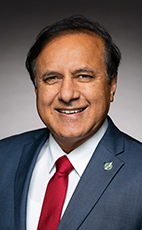 Shafqat Ali
- Introduced
- 2025-12-09
- Debated
- Never mentioned in debate
- Sponsor
- Shafqat Ali · Liberal · Brampton—Chinguacousy Park (ON)
This bill authorizes the federal government to spend a total of $10,848,320,356 from the government's general bank account (the Consolidated Revenue Fund) to cover public service costs for the fiscal year running from April 2025 to March 2026. This money is on top of what was already approved earlier in the year, and it corresponds to the spending requests laid out in the government's "Supplementary Estimates (B)" for this fiscal year.
The money is divided among dozens of federal departments, agencies, and Crown corporations, covering a wide range of purposes: operating costs, capital projects, grants, and contributions. Examples include funding for National Defence, Indigenous Services, Immigration, Global Affairs, Health, the RCMP, VIA Rail, museums, and various economic development agencies, among many others. Each item in the bill specifies exactly what the funds can be used for, and departments are only allowed to spend the money for those stated purposes.
The bill also includes technical rules about timing: all the funding is treated as if it took effect on April 1, 2025, and most of it must be used within this fiscal year, though a smaller portion (about $185.7 million, mostly for the Canada Revenue Agency) can be spent up until March 2027. Any unspent amounts in that category will expire after that date. Overall, this is a routine "supplementary" spending bill that formally authorizes previously planned government expenses rather than introducing new policy.
This bill authorizes the federal government to withdraw a fixed sum from the Consolidated Revenue Fund to pay for government spending already itemized in the Supplementary Estimates (B) for 2025–26.
- Amount authorized — up to $10,848,320,356 may be paid out of the Consolidated Revenue Fund for federal public administration expenses not otherwise provided for, covering the fiscal year ending March 31, 2026.
- Allocation — the sum is divided among named departments, agencies, and Crown corporations (e.g., National Defence, Indigenous Services, Immigration, RCMP, CBC-adjacent bodies) according to the specific items and amounts listed in Schedules 1 and 2; funds for each item may only be used for the purpose stated for that item.
- Retroactive effect — the provisions and transfers of appropriations are deemed to have taken effect as of April 1, 2025, before the bill's actual assent date.
- Extended charging period — amounts in Schedule 2 (mainly Canada Revenue Agency funding) may be charged and paid until March 31, 2027, one fiscal year beyond the year the money is voted for, with unused balances lapsing after that.
- Discretionary sub-authorities embedded in the items — individual votes give ministers, the Treasury Board, or the Governor in Council specific discretionary powers, such as the Treasury Board's authority to supplement other appropriations for "strategic management initiatives" or "compensation adjustments," and the Governor in Council's authority to approve terms for provincial agreements on inmate confinement or electricity sales in remote areas.
- Oversight — spending is confined to the purposes stated in each item, and post-year accounting adjustments must occur before the relevant Public Accounts are tabled in Parliament; there is no separate review or sunset mechanism beyond the fiscal-year lapsing rules already described.
Read from the bill's own text by AI. It describes what the bill allows, not whether that is justified.
Stage history
- Proposal — introduced (House 1st reading)Dec 9, 2025
- House — 2nd readingDec 9, 2025 · same day
- House — 3rd readingDec 9, 2025 · same day
- Senate — 1st readingDec 9, 2025 · same day
- Senate — 2nd readingDec 10, 2025 · 1 day later
- Senate — 3rd readingDec 10, 2025 · same day
- LawDec 11, 2025 · 1 day later