Appropriation Act No. 1, 2026-27
An Act for granting to His Majesty certain sums of money for the federal public administration for the fiscal year ending March 31, 2027
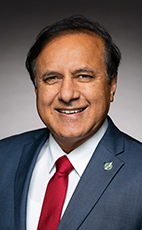 Shafqat Ali
- Introduced
- 2026-03-24
- Debated
- Never mentioned in debate
- Sponsor
- Shafqat Ali · Liberal · Brampton—Chinguacousy Park (ON)
This bill is Canada's first Appropriation Act for the 2026-27 fiscal year (the year running from April 2026 to March 2027). It authorizes the government to withdraw a total of $86,422,679,148 from the Consolidated Revenue Fund (essentially the federal treasury) to keep departments, agencies, and Crown corporations running and paying their bills while Parliament continues reviewing the full year's spending plans in detail.
Rather than granting a full year's budget all at once, this is "interim supply" — it releases only a portion (roughly a few months' worth) of each department's planned annual spending, calculated as fractions such as three-twelfths, four-twelfths, or up to twelve-twelfths of the amounts listed in the government's Main Estimates, depending on the department and type of spending. This keeps government operations funded without interruption until a later, more complete appropriation bill is passed. The money covers a huge range of federal activities and organizations, including Indigenous Services, Health Canada, Immigration, the RCMP, Veterans Affairs, Global Affairs, Parks Canada, the CBC-related and cultural agencies like Telefilm, Statistics Canada, the Canada Revenue Agency, and dozens of others, along with grants and contributions such as foreign aid commitments and support for international financial institutions.
The bill also contains standard technical rules: money can only be spent for the purposes stated against each item, unspent funds in most cases lapse (expire) if not used by the time the government's official Public Accounts are tabled, and one specific schedule (Schedule 2, covering the Canada Revenue Agency) is allowed extra flexibility to be spent or adjusted up until March 2028. Overall, the bill does not create new programs or policies — it simply authorizes short-term funding to keep existing federal programs and services operating.
This bill authorizes the government to withdraw up to $86,422,679,148 from the Consolidated Revenue Fund to fund federal departments and agencies for the 2026–27 fiscal year, as itemized across schedules tied to the Main Estimates.
- Authorized spending — money is released to named departments, agencies and Crown corporations (e.g., RCMP, Health Canada, CRA, Indigenous Services, Marine Atlantic Inc., Telefilm Canada) for the purposes and conditions stated against each line item; funds cannot be spent on purposes other than those specified.
- Treasury Board discretion — the Treasury Board (a Cabinet committee) is given authority under "Government Contingencies" ($1,000,000,000) and "Defence and Security Initiatives" ($1,000,000,000) votes to supplement any other appropriation for miscellaneous, urgent or unforeseen expenditures, including creating new grants or increasing existing ones, provided the spending stays within a department's existing legal mandate — the specific use is not fixed by the bill itself.
- Ministerial financial guarantees — the Minister of Finance and the Minister of Foreign Affairs are authorized to provide loans, direct payments, or loan guarantees to international bodies (e.g., up to US$1,000,000,000 in guarantees to the World Bank for loans to Ukraine, running to fiscal year 2051–52; €200,000,000 in guarantees to the European Bank for Reconstruction and Development for Naftogaz loans), with ceilings set in the bill but timing and drawdown left to ministerial discretion.
- Cross-year accounting adjustments — appropriations may be charged to the public accounts after the fiscal year ends, up to the point the Public Accounts are tabled in Parliament, for bookkeeping adjustments that don't involve new payments; Schedule 2 items may be paid until March 31, 2028, with unused balances lapsing after that.
- Revenue-offset spending authority — several departments (e.g., Industry, Justice, Shared Services Canada) are authorized to spend revenues they collect from services rendered (such as internal support services or IT services) to offset their own costs in the same year, without a separate appropriation for that revenue.
- Oversight — spending is confined to the amounts and purposes listed in the schedules; no additional reporting, review, or sunset mechanism is created by this Act beyond the existing requirement to table Public Accounts.
Read from the bill's own text by AI. It describes what the bill allows, not whether that is justified.
Stage history
- Proposal — introduced (House 1st reading)Mar 24, 2026
- House — 2nd readingMar 24, 2026 · same day
- House — 3rd readingMar 24, 2026 · same day
- Senate — 1st readingMar 24, 2026 · same day
- Senate — 2nd readingMar 25, 2026 · 1 day later
- Senate — 3rd readingMar 26, 2026 · 1 day later
- LawMar 26, 2026 · same day