Mental Health Parity Act
An Act to enact the Mental Health, Addictions and Substance Use Services Act and to make consequential amendments to the Federal-Provincial Fiscal Arrangements Act
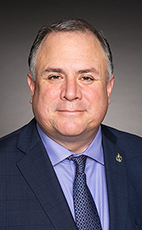 Gord Johns
- Introduced
- 2026-06-03
- Debated
- Never mentioned in debate
- Sponsor
- Gord Johns · NDP · Courtenay—Alberni (BC)
This bill creates a new law called the Mental Health Parity Act, which extends the same kind of rules that currently apply to physical health care under the Canada Health Act to mental health, addictions and substance use services. It sets out conditions that provinces must meet in order to receive their full federal cash contribution (part of the Canada Health Transfer) for these services. Provinces must run their mental health coverage as a public, non-profit system, cover all necessary mental health, addictions and substance use services, provide them to all eligible residents on equal terms, let people keep coverage when moving or travelling between provinces, and ensure reasonable access without extra fees. Provinces are also required to report certain information to the federal government and acknowledge the federal contribution publicly.
If a province fails to meet these standards, or allows doctors to charge patients extra fees (extra-billing) or impose user charges for these services, the federal government can reduce or withhold part of its funding to that province, following a process of notice, consultation, and formal orders. The bill also makes related updates to the Federal-Provincial Fiscal Arrangements Act so that these new rules fit alongside the existing rules for the Canada Health Act, ensuring both physical and mental health services are treated similarly when it comes to federal funding conditions.
In short, the bill doesn't create new mental health programs directly, but it uses federal funding as a lever to push provinces to cover mental health, addictions, and substance use services with the same universality, accessibility, and public administration standards currently required for hospital and doctor services.
This bill creates the Mental Health Parity Act, which sets criteria provinces must meet in their mental health, addictions and substance use insurance plans to receive full federal cash contributions, and gives the federal Minister of Health and the Governor in Council (Cabinet) power to reduce or withhold those payments for non-compliance.
- Conditions on funding — Provinces qualify for a full cash contribution under the Canada Health Transfer only if their health care insurance plans meet five criteria (public administration, comprehensiveness, universality, portability, accessibility) and comply with reporting and information conditions set out in section 11.
- Enforcement power — If the Minister forms the opinion, after a consultation process with the province, that a criterion or condition is not met, the Minister must refer the matter to the Governor in Council, which may then order a reduction or complete withholding of a province's cash contribution, "by an amount that the Governor in Council considers to be appropriate" — no specific ceiling or formula is stated beyond "having regard to the gravity of the default."
- Mandatory deductions for extra-billing and user charges — The Minister must deduct from a province's payment amounts determined (or, absent required information, estimated by the Minister) to correspond to extra-billing or user charges permitted by that province, following consultation with the provincial health minister.
- Regulation-making left to Cabinet — The Governor in Council may make regulations, after consulting provincial health ministers, defining what mental health, addictions and substance use services must be covered, setting accessibility standards, and establishing public reporting requirements — meaning the substantive scope of "comprehensiveness" and "accessibility" is not fixed in the Act itself but left to future regulation.
- Reporting and tabling, no vote or sunset — The Minister must table an annual report on provincial compliance, and any Governor in Council order reducing or withholding funds must be tabled in Parliament within 15 sitting days — these are disclosure requirements only; Parliament does not vote on or approve the orders, and the Act contains no sunset clause.
- Continuing and retroactive application — Reductions or withholdings can be reimposed in following fiscal years if the Minister remains satisfied the default continues, and deductions for extra-billing or user charges may be applied in the fiscal year of the breach or in either of the two following years.
Read from the bill's own text by AI. It describes what the bill allows, not whether that is justified.
Stage history
- Proposal — introduced (House 1st reading)Jun 3, 2026