Appropriation Act No. 2, 2026-27
An Act for granting to His Majesty certain sums of money for the federal public administration for the fiscal year ending March 31, 2027
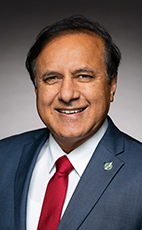 Shafqat Ali
- Introduced
- 2026-06-08
- Debated
- 1 mention in Parliament
- Sponsor
- Shafqat Ali · Liberal · Brampton—Chinguacousy Park (ON)
This bill is a routine federal spending bill, known as an appropriation act, that formally authorizes the government to pay out money from the government's bank account (the Consolidated Revenue Fund) to run federal departments and agencies for the fiscal year running from April 1, 2026 to March 31, 2027. It grants a total of about $144 billion, on top of amounts already approved earlier in an interim spending bill. This money covers day-to-day operating costs, capital projects, and grants and contributions across virtually every federal department, agency, and Crown corporation, including things like National Defence, Indigenous Services, Employment and Social Development, health agencies, the RCMP, immigration, transportation, and dozens of smaller bodies like museums, tribunals, and oversight offices.
The bill itself does not create new programs or policies. Rather, it lists, department by department, the specific dollar amounts Parliament is authorizing for each area of government activity, based on the government's "Main Estimates" (its detailed spending plan) for the year. Schedule 1 covers the bulk of this funding, about $140.4 billion net of amounts already granted; Schedule 2 covers about $3.6 billion for the Canada Revenue Agency specifically, with slightly different rules allowing that money to be used over two fiscal years. The amounts listed are net figures, meaning they represent the remaining funds needed after subtracting interim funding Parliament already approved in an earlier bill (Appropriation Act No. 1) to keep government running at the start of the fiscal year.
Practically, this bill is what gives legal authority for the government to actually spend the money set out in its budget plan for departments and services; without it, federal departments would not be legally allowed to spend beyond amounts previously authorized. The bill also includes standard technical provisions clarifying that spending authority takes effect retroactively to April 1, 2026, and setting rules for how leftover funds and accounting adjustments are handled at year-end.
This bill authorizes the government to withdraw $144,032,017,964 from the Consolidated Revenue Fund to pay for federal departments, agencies, and Crown corporations for the fiscal year ending March 31, 2027.
- Authorized spenders — the sum is divided among named departments, agencies, boards, and Crown corporations (e.g., National Defence, Indigenous Services, CBC, CMHC, RCMP), each restricted to spending only for the purposes listed against its own line item in Schedule 1 or Schedule 2.
- Discretionary contingency funds — the Treasury Board (Cabinet's expenditure-management committee) is given authority to draw on set-aside amounts — including $1,000,000,000 for "Government Contingencies" and $1,000,000,000 for "Defence and Security Initiatives" — to supplement other appropriations for "miscellaneous, urgent or unforeseen" spending or new grants and contributions, without returning to Parliament for each use, as long as it stays within a department's existing legal mandate.
- Loan and guarantee powers — the Minister of Finance and Minister of Foreign Affairs are authorized to extend specific financial assistance, such as loans to the International Development Association (up to US$916,073,000) and loan guarantees to Ukraine via international banks (up to US$1,000,000,000, running through fiscal year 2051–52).
- Revenue retention — numerous departments and agencies (e.g., Health, CRTC, Justice) are authorized to spend revenues they collect themselves (e.g., service fees, internal support charges) to offset their own expenditures, rather than remitting them to the general treasury.
- Timing and carry-over — spending under Schedule 1 must be recorded by the time that year's Public Accounts are tabled in Parliament (a report, not a vote); spending under Schedule 2 (Canada Revenue Agency) can be charged and paid until March 31, 2028, with any unused balance lapsing after that.
- Oversight — the only accountability mechanisms named are the tabling of Public Accounts and the requirement that each item be spent solely for its stated purpose; there is no sunset clause, and no further parliamentary vote is required before Treasury Board draws on the contingency votes.
Read from the bill's own text by AI. It describes what the bill allows, not whether that is justified.
Stage history
- Proposal — introduced (House 1st reading)Jun 8, 2026
- House — 2nd readingJun 8, 2026 · same day
- House — 3rd readingJun 8, 2026 · same day
- Senate — 1st readingJun 9, 2026 · 1 day later
- Senate — 2nd readingJun 11, 2026 · 2 days later
- Senate — 3rd readingJun 16, 2026 · 5 days later
- LawJun 17, 2026 · 1 day later