Appropriation Act No. 3, 2026-27
An Act for granting to His Majesty certain sums of money for the federal public administration for the fiscal year ending March 31, 2027
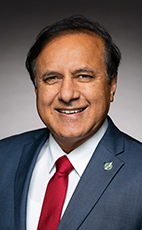 Shafqat Ali
- Introduced
- 2026-06-08
- Debated
- Never mentioned in debate
- Sponsor
- Shafqat Ali · Liberal · Brampton—Chinguacousy Park (ON)
This bill authorizes the federal government to spend a total of $11,127,236,516 from the Consolidated Revenue Fund to cover government expenses for the fiscal year running from April 2026 to March 2027. This is routine annual "supply" legislation that Parliament passes to formally approve spending that was already detailed in the government's Supplementary Estimates (A) — essentially a top-up to previously approved budgets to reflect updated spending needs identified partway through the planning cycle.
The money is spread across dozens of federal departments, agencies, and Crown corporations, covering a huge range of activities: national defence, Indigenous services and Crown-Indigenous relations, healthcare and public health, housing and infrastructure, immigration, transportation (including VIA Rail and Marine Atlantic), the RCMP, cultural institutions (like the National Gallery and various museums), regional economic development agencies, foreign affairs and international assistance, and many smaller offices and tribunals. Amounts range from as little as $1 for certain grant authorities to over $3.1 billion for Crown-Indigenous Relations and Northern Affairs and over $2.2 billion for Housing, Infrastructure and Communities. Each department's funding is tied to specific purposes listed in the bill, such as operating costs, capital expenditures, grants, or contributions.
The bill also sets technical rules about timing: spending is deemed to have started on April 1, 2026, transfers between funding items are authorized retroactively, and a small portion of funds (just over $17.5 million, mainly for the Canada Revenue Agency) can be carried over and charged against either the 2026-27 or 2027-28 fiscal year, with unused amounts lapsing after that. These provisions are standard mechanisms for managing government accounts and do not change policy — they simply ensure the money is properly authorized and tracked.
This bill authorizes the government to withdraw up to $11,127,236,516 from the Consolidated Revenue Fund to pay for federal departments, agencies and Crown corporations for the fiscal year ending March 31, 2027, as itemized in the attached schedules.
- Who may spend — the sums are paid out for the specific departments, agencies, museums, and Crown corporations (e.g. Canada Post Corporation, Correctional Service of Canada, Department of National Defence) listed by name in Schedules 1 and 2, each tied to the purposes stated in its own line item.
- Spending conditions — section 4 restricts each authorized amount to "the purposes, and subject to any terms and conditions, specified in the item," meaning the schedules themselves set the boundaries of what money can be used for.
- Retroactive effect — sections 3 and 4(2) deem the authorizations and any transfers of appropriations to have taken effect on April 1, 2026, before the bill's actual assent date.
- Extended charging period — section 6 allows amounts in Schedule 2 (here, funds for the Canada Revenue Agency) to be charged and paid at any time up to March 31, 2028, one fiscal year beyond the year the money was voted for, with unused balances lapsing after that.
- Embedded departmental authorities — individual line items grant ancillary powers to specific bodies, such as authority for the Minister of Public Safety to enter into agreements with provinces for inmate confinement (subject to Governor in Council approval), or authority for the Department of National Defence to commit up to $129,086,308,732 in multi-year spending commitments regardless of which year payment falls due.
- Oversight — the Act itself contains no review or reporting mechanism beyond the future tabling of the Public Accounts referenced in sections 5 and 6; there is no sunset clause on the underlying departmental authorities listed in the schedules, though the appropriated funds themselves lapse if unspent within the stated periods.
Read from the bill's own text by AI. It describes what the bill allows, not whether that is justified.
Stage history
- Proposal — introduced (House 1st reading)Jun 8, 2026
- House — 2nd readingJun 8, 2026 · same day
- House — 3rd readingJun 8, 2026 · same day
- Senate — 1st readingJun 9, 2026 · 1 day later
- Senate — 2nd readingJun 11, 2026 · 2 days later
- Senate — 3rd readingJun 16, 2026 · 5 days later
- LawJun 17, 2026 · 1 day later